



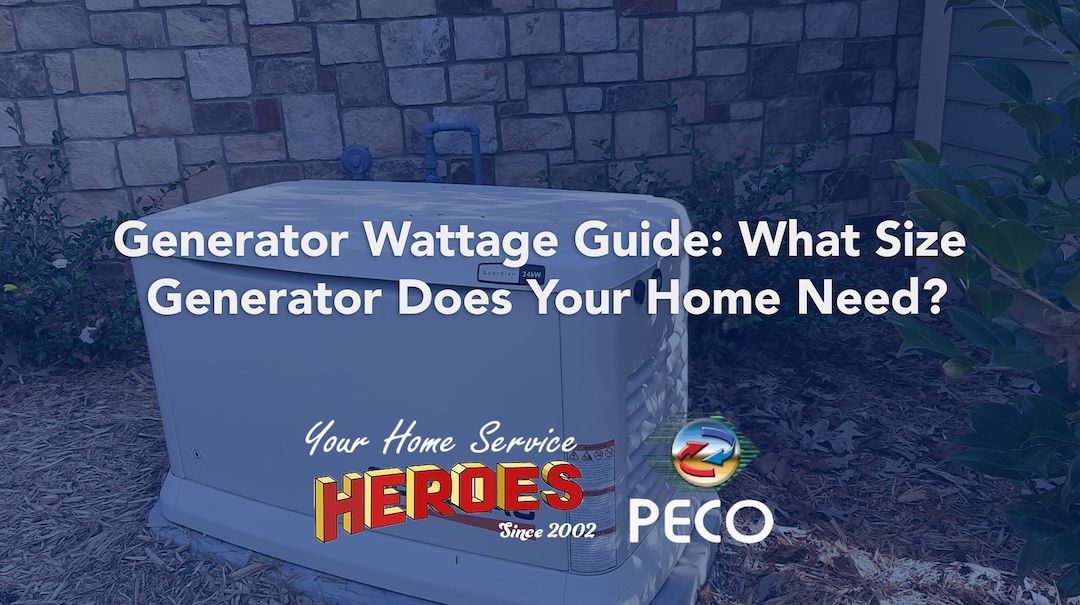
When the power goes out, a generator can help keep essential appliances and home systems running. But how do you know what size generator your home needs?
Your home’s square footage can provide a general estimate, but factors like your HVAC system, appliance usage, and startup power also play a role. Understanding these requirements can help you narrow down your options.
Here’s what to know about generator wattage and why a professional assessment is important for choosing the right size generator.
Understanding Generator Size: Watts vs. Kilowatts
Before comparing generator sizes, it’s helpful to understand exactly how electrical power is measured.
Watts (W) are a unit of measurement for electrical power. Individual appliances use watts to describe how much power they need to operate. Kilowatts (kW) are a larger unit of measurement used to describe a generator’s capacity. There are 1,000 watts in a kilowatt.
For example, a 10,000-watt generator has a capacity of 10 kilowatts. A 22 kW generator has a capacity of 22,000 watts.
Generators come in different sizes to accommodate different backup power needs. A smaller generator may be enough to run essential items, such as your refrigerator, lights, and select outlets. A larger standby generator might power your heating and cooling system, kitchen appliances, and more of your home at once.
Generator Size By Home Square Footage
Square footage can help you begin estimating your generator needs. Usually, larger homes mean there’s more space to heat and cool as well as more appliances and electrical circuits to power.
| Home square footage | Possible generator range | Typical considerations |
| Under 1,000 sq. ft. | 10-14 kW | Essential circuits, refrigeration, lighting, and possibly a small heating or cooling system |
| 1,000 – 1,500 sq. ft. | 10-18 kW | Essential circuits, furnace, and potentially central air conditioning |
| 1,500 – 2,000 sq. ft. | 14-22 kW | More appliances, central HVAC, sump pumps, and kitchen equipment |
| 2,000 – 2,500 sq. ft. | 18-26 kW | Greater electrical demand, multiple major appliances, and larger HVAC systems |
| Over 2,500 sq. ft. | 22-28+ kW | Whole-home backup, multiple HVAC systems, or substantial all-electric loads |
Your square footage is a great starting point, but it doesn’t tell the whole story. Your HVAC system, appliances, and backup power priorities all affect your electrical needs, so a professional can help you determine the right generator size for your home.
What Affects Your Generator Wattage Requirements?
Your home’s square footage is only one piece of the puzzle. Several other factors can significantly change how much generator capacity you’ll need. These include:
1. Heating and Cooling Systems
Heating, ventilation, and air conditioning (HVAC) systems can be among the biggest contributors to your home’s electrical demand.
When evaluating your HVAC system, consider:
-
- Heating type: Gas and oil furnaces typically use electricity to power components such as the blower motor and controls, while electric furnaces can draw significantly more power to generate heat.
- Cooling capacity: A larger central air conditioning system may draw more power than a smaller unit. Your system’s size, efficiency, and electrical specifications all influence how much generator capacity it needs to operate.
- Number of systems: The more systems you have, the more generator capacity you’ll need. For example, a home with separate air conditioning units for different floors may need more generator capacity than a home with a single system, especially if you want to run multiple units simultaneously.
- Starting demand: Compressors and blower motors can require a temporary surge of electricity when they start. Your generator must be able to handle these startup surges, particularly if multiple systems start around the same time.
If you want to keep your home comfortable during an outage, tell your generator professional whether you need heating, cooling, or both. These choices can make a major difference in the recommended generator size.
2. Major Appliances and Household Equipment
The appliances you want to use during an outage also affect the generator capacity you need. Some draw relatively little power, while others can place a substantial demand on the system.
Some of the most important appliances and systems to account for include:
-
- Refrigerators and freezers: Keeping your refrigerator and freezer running can help prevent food from spoiling during a power outage. When sizing your generator, account for their normal operating needs as well as the extra power their compressors may draw when they start.
- Medical equipment: If anyone in your household relies on electrically powered medical equipment, such as an oxygen concentrator or home medical device, maintaining power may be essential. Include this equipment in your backup power plan and speak with your healthcare provider about your specific backup needs.
- Lighting and outlets: Lighting and electrical outlets help you maintain everyday comfort during an outage, from illuminating rooms and charging phones to powering computers and other small devices. While individual items may use relatively little electricity, their combined demand can add up.
- Microwaves and cooking appliances: Microwaves, electric ovens, stovetops, and other cooking appliances can draw considerable power while operating. If you want to prepare meals as usual during an outage, let your installer know which appliances you plan to use and whether they will run at the same time.
- Electric water heaters and dryers: Electric water heaters and clothes dryers can place a significant demand on your generator because they use substantial amounts of electricity to heat water or air. If you want to run either appliance during an outage, your generator may need additional capacity to accommodate the load.
- Sump pumps and well pumps: If your home has a sump pump or relies on a well for water, these systems may be essential parts of your backup power plan. Make sure your generator can accommodate their operating and startup requirements alongside your other priority appliances.
- Electric vehicle (EV) chargers: Charging an electric vehicle during a power outage may require a larger generator, depending on the charger’s power demand and what else you want to run. If vehicle charging is not a priority, leaving it off your backup load plan can reserve capacity for essential household systems.
Think about which appliances you consider essential and which you could temporarily do without. If you only need to power selected circuits, you may be able to choose a smaller generator than you would need for whole-home backup.
3. Running Watts vs. Starting Watts
One important part of generator sizing is accounting for the difference between running wattage and starting wattage.
Running watts are the amount of power an appliance needs to operate normally. Starting watts, sometimes called surge watts, are the additional power some appliances require briefly when they switch on.
This difference is particularly important for equipment with electric motors, because a motor may need substantially more power to start than it does to keep running. Air conditioners, refrigerators, and water pumps are common examples of appliances that can draw extra power during startup.
A generator that can handle your home’s total running wattage may not have enough capacity to accommodate these startup surges, so it’s important to consider your appliances’ electrical specifications.
4. Which Appliances Need to Run at the Same Time?
You don’t necessarily need a generator that can power every appliance at its maximum demand simultaneously. Your backup plan can influence the capacity you need.
For example, you might prioritize the refrigerator, lights, internet, and sump pump, while temporarily avoiding the electric dryer or delaying EV charging. Or, you may want a system that keeps your central air conditioning running while still supporting most everyday household activities. If you have medical equipment, you’ll also need to account for its power requirements and prioritize keeping it running throughout an outage.
How to Estimate Your Home’s Generator Needs
Before scheduling an evaluation, you can take a few practical steps to prepare.
- Confirm your home’s square footage. Use your home’s square footage as a starting point.
- List the appliances you want to power. Include your HVAC system, refrigerator, sump pump, water heater, and other important equipment.
- Identify your heating and fuel sources. Note whether your home uses gas, oil, propane, or electricity for heating and cooking.
- Check appliance specifications. Record running and starting wattage when available, along with the model numbers of major equipment.
- Decide on your backup priorities. Consider whether you want to power essential circuits only or maintain more of your home’s normal operation.
This information will help a professional assess your expected electrical load and recommend a suitable generator.
Schedule a Generator Evaluation With PECO
Every home has different backup power needs. Whether you want to keep essential appliances running or maintain greater comfort during an extended outage, the first step is understanding your home’s electrical requirements.
At PECO Heating & Cooling, we help homeowners find backup power solutions that fit their homes, budgets, and needs. Our experienced team can guide you through the installation process, from evaluating your power requirements to selecting a generator that keeps your essential systems running when the grid goes down. Our home service heroes install and service all major generator brands, including Generac and Kohler.
Want to be prepared for the next outage? Schedule a generator evaluation with PECO to determine the right capacity for your home and the systems you want to keep running.