



Your air conditioner is running, but it’s blowing warm air. Here are the most common causes and what you can do about each.
There’s nothing quite as frustrating as turning on your air conditioner on a hot day, only to feel warm air coming through the vents. If your thermostat is set and your system is running, why won’t your home cool down?
The good news is that an AC blowing warm air doesn’t always mean you’re looking at a major repair. Some causes are quick fixes you can handle yourself. Others need a technician. Either way, here’s a breakdown of the most likely culprits and what to do about each one.
Why Is My AC Blowing Warm Air, And How Can I Fix It?
Here are some common reasons why your AC is blowing warm air and how to fix it:
1. Your Thermostat Is Set Incorrectly
It sounds obvious, but thermostat settings are one of the most common and most overlooked causes of warm air coming through the vents. Before assuming something is wrong with your system, check two things.
First, check that your thermostat mode is set to COOL, not FAN (and definitely not HEAT). Then, look at the fan setting. If it’s set to ON and not AUTO, your fan will run continuously, even when your system isn’t actively cooling. As a result, warm, unconditioned air will get pushed through your vents between cooling cycles.
Switching the fan to AUTO and confirming the mode is set to COOL takes about ten seconds and costs nothing, so it’s always a great place to start AC troubleshooting.
2. You Have A Dirty Or Clogged Air Filter
If your thermostat checks out, the next thing to look at is your air filter. A clogged filter restricts the airflow your system needs to function properly. Less airflow means less cooling and a harder-working system. If the blockage is severe enough, you may wind up with a frozen evaporator coil that pushes warm air through your home instead of cold.
The good news is that the fix is pretty straightforward. Just turn off your system, find the filter, and check its condition. If it’s grey and packed with dust, it’s time to swap out filters. Most households should be replacing filters every one to three months, though homes with pets or high dust levels may need to do it more frequently.
3. You Have A Dirty Or Blocked Outdoor Unit
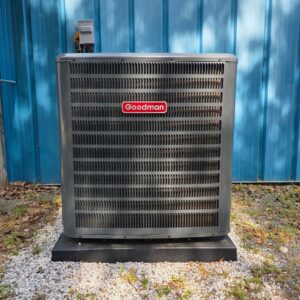
Your outdoor condenser unit does the heavy lifting of releasing heat from your home into the outside air. But it can only do that effectively if air can move freely through it. When the condenser gets coated in dirt, dust, and debris, or if vegetation grows around it, airflow becomes restricted. This can cause your unit to blow warm air.
To clean and clear your outdoor unit:
- Walk around the unit and take a look at your condenser fins. These thin metal slats around the outside of the unit should be clean and unobstructed.
- Clear away any vegetation, debris, or buildup within at least two feet of the unit.
- Gently rinse any dirty fins with a garden hose. Avoid high-pressure washing, which can bend the fins and cause further damage.
- For heavily soiled fins, apply a foaming coil cleaner before rinsing to break down built-up grime.
- Be sure to give the unit time to dry before restarting your system.
4. There’s A Refrigerant Leak
Refrigerant is what makes the cooling process possible. It circulates through your system, absorbing heat from your indoor air and releasing it outside. When refrigerant levels drop, your AC will keep running, but it might push out warm air.
Unlike the issues covered above, refrigerant leaks aren’t a DIY fix. Handling refrigerant requires EPA certification, and adding more without addressing the leak first will only buy you time before the problem returns. So, you’ll definitely need to call a licensed HVAC technician.
In the meantime, watch out for:
- Warm or lukewarm air, even when the system appears to be running normally.
- Ice building up on the refrigerant line or evaporator coil.
- Hissing or bubbling sounds near the indoor air handler or outdoor unit.
- A gradual increase in your energy bills with no clear cause.
The faster you catch and fix a refrigerant leak, the less damage it can do to the rest of your system, particularly your compressor, which takes the hardest hit when refrigerant levels run low.
5. The Evaporator Coils Are Frozen
Your evaporator coil sits inside your indoor air handler and is responsible for absorbing heat from the air passing through your system. However, when restricted airflow, low refrigerant, a malfunctioning blower fan, or another underlying problem disrupts the process, the coil can drop below freezing and ice over. It won’t be able to absorb heat, which means your system ends up circulating warm, uncooled air through your home instead.
If you suspect frozen coils, you should turn your system off immediately since running the AC in cooling mode with frozen coils can cause further damage. From there, open the access door to your system’s interior and check the evaporator coil for any visible frost or ice buildup.
If you find ice, the most straightforward solution is to let it thaw on its own. Switching the fan to ON can help speed this up, though it may still take several hours. Once fully thawed, check your air filter and make sure all vents are open before restarting in cooling mode.
6. Your Compressor Is Failing
The compressor pressurizes the refrigerant and keeps the entire cooling cycle moving. It’s a vital part of every HVAC system, and if it fails, you’ll start to notice warm air in your vents and reduced cooling.
Compressor problems aren’t something you can fix on your own. You’ll need a technician’s help. But there are warning signs worth listening for before you call a professional over. Listen for:
- Chattering or ticking: If you hear any chattering or ticking noises, it’s possible your compressor is having trouble turning on and may be struggling to build pressure.
- Rattling, clicking, or rumbling: Loud rumbling, rattling, or clicking during operation can signal that internal components are loosening or failing.
- Other unusual or strange noises: Pay attention to any sound that’s new, out of place, or getting louder over time. Anything outside of your system’s baseline hum could point to a compressor issue.
When To Call An HVAC Technician
Some of these causes are pretty simple fixes. You can adjust your thermostat setting, swap filters, and clear debris from around your outdoor unit in minutes. Issues like refrigerant leaks, frozen coils with an unknown cause, and compressor problems will require a licensed professional.
If you’ve checked the basics and your AC is still blowing warm air, it’s probably time to call a professional. Running a malfunctioning air conditioner won’t only lead to a warmer home. It can also result in accelerated wear on critical components, higher energy bills, and costly repairs that could have been avoided.
If your AC is blowing warm air and you’re not sure where to start, schedule service with PECO Heating & Cooling online today, or give us a call at (864) 639-2424. We are your hometown service heroes for all your air conditioning needs this summer.
We can diagnose your problem, walk you through the options, and have your home cool and comfortable again as quickly as possible.
Schedule service now.